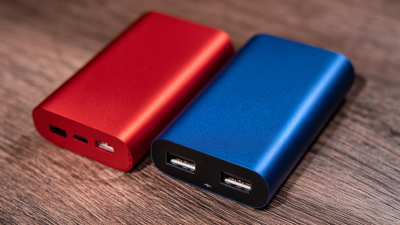
Picking a Phone Power Bank for global sourcing isn’t just about capacity. Honestly, it’s a product-quality call—one that touches batteries, charging protocols, packaging, testing, and how disciplined a supplier really is. A unit stamped “20,000mAh” can behave very differently in the real world, especially when you’re topping up a phone during airport transfers, outdoor work, or back-to-back business meetings.
Dr. Venkat Srinivasan, Director of the Argonne Collaborative Center for Energy Storage Science, put it well: “A battery is a system, not just a cell.” That idea matters a lot when you’re comparing suppliers. Buyers should look at cell chemistry, rated output, conversion efficiency, thermal controls, and cycle-life evidence. Ask for test reports, factory audit records, and clear explanations of the protection features. Don’t just trust nice product photos.
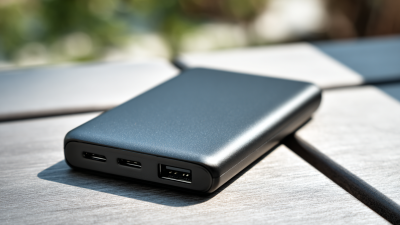
A practical sourcing review should cover USB-C input and output, Power Delivery support, charging speed, weight, dimensions, and airline-use restrictions. The housing should feel solid—no loose seams, no sharp edges. Labels need to stay readable after being handled again and again. Small details matter.
And yes, there’s room for doubt. A supplier with great samples may still struggle to keep mass production consistent. A low price can hide weaker cells, limited testing, or unstable component sourcing. That’s why buyers should order production samples and test them under realistic conditions.
The strongest Phone Power Bank isn’t always the biggest one. It’s the safest, most traceable, and best suited to the target market. Global sourcing rewards careful questions—not rushed assumptions.
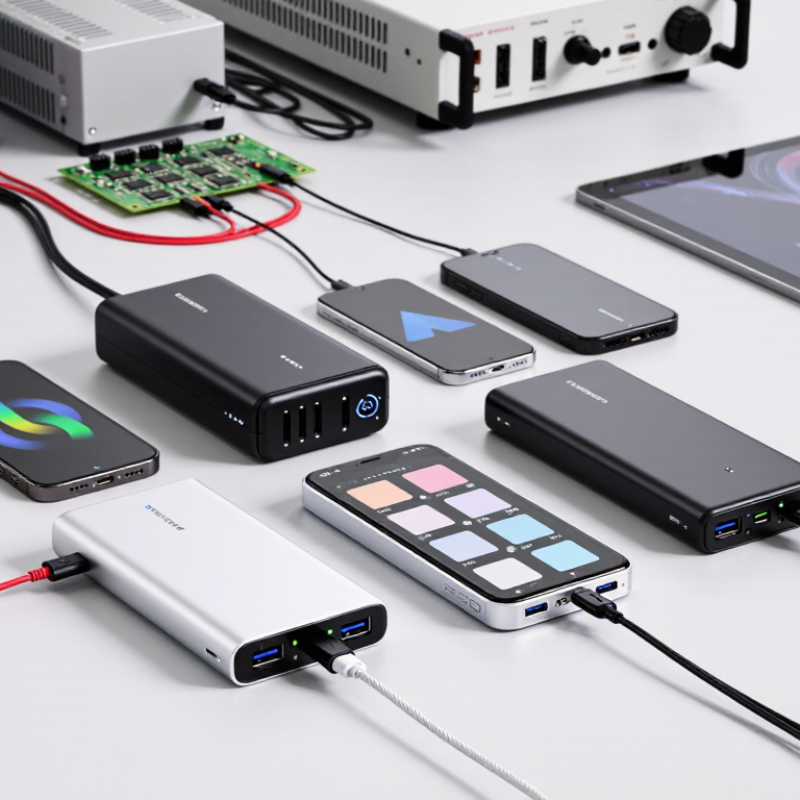
Choosing a phone power bank for global sourcing starts with the phone model, not the advertised capacity. Different devices accept different charging speeds, ports, and battery sizes. A compact phone may work well with a 5,000 mAh unit, while a larger model often needs 10,000 mAh or more. Capacity labels are not fully usable energy. Conversion loss matters.
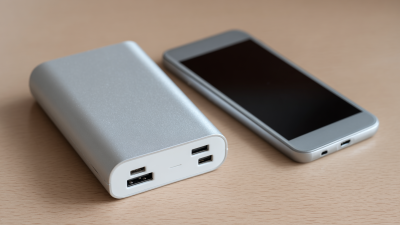
Check the phone’s input requirements before requesting samples. A USB-C port may support fast charging, but the power bank must offer the correct output profile. Older models may need a USB-A cable, while newer models often rely on USB-C. For the search term I Phone Power Bank, confirm the intended device carefully. Small errors can create costly returns. Measure the power bank beside a phone case, too. A thick case can block magnetic or short connectors.
My first sourcing sheet was too simple. It listed only capacity and color. That was a mistake. I now record charging time, heat after thirty minutes, cable fit, recharge time, and safety test documents. Ask suppliers for test samples from several phone models. Use the same cables customers will receive. A power bank that performs well in a laboratory may feel slow in daily use. Check plug compatibility for each market, packaging language, and transport requirements. Reliability is built through repeated checks, not confident promises.
When choosing a phone power bank for global sourcing, compare capacity beyond the printed mAh number. A 20,000mAh cell rating often reflects a 3.7V internal voltage. Its theoretical energy is about 74Wh, not 20,000Wh. Conversion losses reduce the usable output. A practical unit may deliver 60Wh or less after voltage conversion, heat, and cable resistance.
Energy density affects shipping cost, pocket comfort, and product positioning. Higher density can create a smaller enclosure, but it may increase heat during fast charging. Check cell chemistry, weight, dimensions, and thermal test records. Real-world output matters more than laboratory capacity. Test samples with common phones, different cables, and repeated charging cycles. One sample I tested looked excellent on paper, yet its output dropped sharply after several cycles. That result changed my supplier evaluation.
Tips: Request capacity measured at the rated Output Voltage. Ask for continuous output data, not only peak wattage. Test at 25%, 50%, and 80% battery levels. Review safety documentation and market-specific compliance records before placing a large order. Keep the test method written and repeatable. Small details expose weak claims.
When sourcing a Cell Phone Power Bank, start with the charging standards used by your target devices. USB-C Power Delivery supports faster input and output, while PPS can improve charging efficiency on compatible phones. Do not treat “fast charging” as a universal specification. Check voltage profiles, maximum wattage, and whether the power bank can charge and discharge simultaneously. A model rated at 20,000 mAh may deliver less usable energy after conversion losses. I verify this with a USB power meter, not only the printed capacity.
Port selection affects daily reliability. A USB-C port may support input only, output only, or both. The product sheet must state this clearly. USB-A remains useful for older cables, but its output may be slower or limited. Look for protected ports, firm sockets, and clear current ratings. During sample checks, connect several cable lengths and gently move each plug. Loose connections often appear before electronic failures.
Cable compatibility deserves equal attention. Use cables rated for the intended current and charging protocol, especially above basic power levels. A thin, unmarked cable can create heat, reduce speed, or interrupt charging. Test common phone sizes, cases, and low-power accessories before placing a larger order. I once approved a compact sample that blocked a thick protective case; that mistake changed my inspection checklist. Confirm safety documentation, labeling, and regional plug requirements with qualified suppliers and testing bodies. Specifications can still mislead.
How to Choose a Phone Power Bank for Global Sourcing
Safety should guide every power bank sourcing decision, not only the purchase price. Check whether the battery pack has protection against overcharging, overheating, over-discharging, and short circuits. A reliable battery management system should stop abnormal current before the casing becomes dangerously hot. Ask for test reports, not only printed certification marks.
Look for evidence of testing against IEC 62133-2, where applicable, and request UN 38.3 transport documentation for lithium battery shipments. RoHS requirements may restrict certain hazardous substances, while CE marking can apply to products entering the European market. However, CE is not a universal safety certificate. Requirements differ by destination, product design, charger configuration, and importer responsibilities. Verify current rules with an accredited laboratory or qualified compliance specialist.
Inspect the actual sample carefully. Check the cell specification, cable connection, enclosure strength, label details, and charging behavior under load. A power bank that feels warm during normal use deserves further testing. Production samples can also differ from approved samples, so batch inspections matter. One certificate is not enough. Test reports may cover an earlier design, and paperwork can hide missing evidence. Maintain a compliance file with declarations, laboratory reports, transport records, factory quality controls, and traceable model numbers. Small details matter. A missing revision date or unclear test scope can delay customs clearance and weaken consumer protection.
Use battery energy capacity as an early screening point for international shipping. Power banks with lithium-ion cells are generally treated as spare batteries for air transport: up to 100 Wh is commonly permitted in carry-on baggage without airline approval, 100–160 Wh commonly requires airline approval, and units above 160 Wh are generally not accepted on passenger aircraft. Always verify current airline and destination-country requirements.
Reference basis: common lithium-battery passenger-air-transport thresholds and internationally used product-safety and market-compliance frameworks. Confirm the latest rules with the carrier, importer, and destination-market authorities.
A reliable Phone Power Pack begins with supplier verification, not a polished product sample. Request factory audit records, cell traceability, electrical test reports, and recent shipment references. Test capacity at the promised output, not only at the cell’s nominal rating. Check charging stability, heat rise, port strength, and protection against overcharging. IEC 62133-2 and UN 38.3 testing provide useful safety benchmarks for lithium battery products. Certificates alone are not enough.
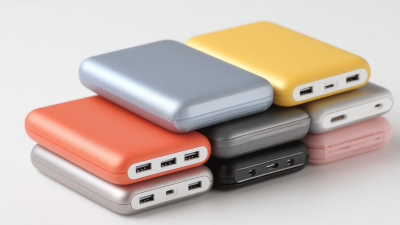
Customization should match the buyer’s real channel and user habits. Confirm enclosure material, battery capacity, charging ports, cable type, display, color, packaging, and language requirements. Ask for tooling fees, minimum order quantities, sample revisions, and approval deadlines in writing. A compact 10,000 mAh unit may suit commuters, while a larger model adds weight and slower handling. Small details matter. A loose USB port can create returns quickly.
Production capacity needs evidence. Review monthly output, critical equipment, staffing, component stock, and peak-season allocation. Ask whether assembly and testing occur in one facility. The Global E-waste Monitor 2024 reported 62 million tonnes of electronic waste in 2022, with only 22.3% formally recycled. This makes repairability, packaging reduction, and battery traceability practical sourcing questions. I would still challenge every forecast. A supplier may promise 100,000 units monthly, yet struggle with a 10,000-unit pilot. Stage orders, inspect pre-shipment samples, and keep failure-rate records after delivery.
How to Choose a Phone Power Bank for Global Sourcing
A low factory price does not reveal the real sourcing cost. I once compared two offers and missed the cost of protective packaging. The cheaper quotation became more expensive after cartons, inspection, samples, and payment fees were added. Build a unit-cost sheet with product price, packaging, testing, inland transport, freight, insurance, customs duties, taxes, and warehouse delivery. Keep currency changes visible. Small errors multiply quickly across 1,000 units.
Shipping conditions need careful checking. Ask whether the quotation covers delivery to a port, airport, or final address. Confirm the agreed trade term in writing. Request carton dimensions, gross weight, battery specifications, and required transport documents. A shipment of Power Bank Power Bank products may face carrier restrictions because lithium batteries require proper classification and handling. Do not rely on a casual message from a supplier. Get the details before booking cargo.
Import responsibility should be assigned clearly. The importer may need to verify product safety rules, labeling, customs declarations, duties, and local recycling obligations. Requirements differ by destination and can change. Check current guidance with customs authorities or a qualified broker. Keep commercial invoices, packing lists, test reports, and transport records together. One missing document can delay a container for days. I would also budget for unexpected inspection or storage charges. That buffer feels wasteful until the first delay occurs.
| Evaluation Dimension | Product or Cost Item | Illustrative Data | Calculation or Requirement | Sourcing and Import Implication |
|---|---|---|---|---|
| 1. Product Specification and Battery Selection | ||||
| Rated capacity | Standard phone power bank | 10,000 mAh at 3.7 V nominal voltage | Energy = 10 Ah × 3.7 V = 37 Wh | Choose capacity by phone battery size, expected recharge cycles, product weight, and transport restrictions. |
| Usable energy | Energy available to the phone | Approximately 85% conversion efficiency | 37 Wh × 85% = approximately 31.45 Wh usable energy | Actual phone charging performance is lower than the nominal mAh printed on the product. |
| Weight target | Product plus retail packaging | Approximately 0.27 kg per unit | 500 units × 0.27 kg = 135 kg gross shipment weight | Confirm net weight, gross weight, carton dimensions, and battery weight before requesting freight quotations. |
| Output performance | USB-C or equivalent wired output | Example target: 20 W maximum output | Check voltage, current, protocol compatibility, safety protection, and temperature performance. | Higher output may increase component cost, testing requirements, heat-management needs, and product liability exposure. |
| Battery transport classification | Standalone rechargeable lithium-ion power bank | UN 3480 | Air shipment must comply with the applicable IATA Dangerous Goods Regulations, packing instructions, marking, labeling, and carrier acceptance rules. | Request a current transport classification, Safety Data Sheet, test summary, and carrier-approved shipping instructions before booking. |
| Battery test documentation | Rechargeable lithium-ion cell or battery | UN 38.3 test summary required for international transport documentation | The test summary should identify the battery type, rated watt-hours, manufacturer or responsible party, and completed UN 38.3 tests. | Missing or inconsistent documentation can cause cargo rejection, customs delays, storage charges, or return-to-origin costs. |
| Air transport watt-hour check | 10,000 mAh battery | 37 Wh nominal energy | Watt-hours = mAh ÷ 1,000 × nominal volts | Wh rating affects applicable air transport rules. The forwarder must verify the current carrier and route requirements. |
| 2. Illustrative Sourcing Cost Calculation for 500 Units | ||||
| Purchase quantity | Standard order size | 500 units | 500 units × unit cost | Confirm minimum order quantity, production lead time, inspection timing, and payment milestones. |
| Ex-factory unit price | 10,000 mAh power bank | USD 8.40 per unit | 500 × USD 8.40 = USD 4,200.00 | Illustrative market-planning figure only; final cost varies by cell grade, output power, housing, packaging, and order quantity. |
| Retail packaging | Printed carton, cable, manual, and protective materials | USD 0.35 per unit | 500 × USD 0.35 = USD 175.00 | Confirm whether artwork, translation, recycling marks, and region-specific warnings are included. |
| Pre-shipment inspection | Visual, functional, capacity, charging, and packaging inspection | USD 60.00 fixed charge | Inspection cost ÷ 500 units = USD 0.12 per unit | Define the inspection standard, sample size, acceptable quality limits, and defect-handling process in the purchase contract. |
| Export documentation | Commercial invoice, packing list, and document processing | USD 40.00 fixed charge | Documentation cost ÷ 500 units = USD 0.08 per unit | Documentation charges may be included in the seller’s quotation or billed separately by the logistics provider. |
| Pre-shipping product cost | Product, packaging, inspection, and documentation | USD 4,475.00 total | USD 4,200.00 + USD 175.00 + USD 60.00 + USD 40.00 | Pre-shipping cost per unit = USD 8.95 |
| Air freight | Dangerous-goods air freight for 135 kg | USD 3.20 per kg | 135 kg × USD 3.20 = USD 432.00 | Actual quotations depend on route, chargeable weight, airline restrictions, season, fuel surcharges, and battery acceptance. |
| Dangerous-goods surcharge | Battery handling and documentation surcharge | USD 0.35 per kg | 135 kg × USD 0.35 = USD 47.25 | Some carriers apply a minimum charge or a fixed dangerous-goods fee rather than a per-kilogram rate. |
| Cargo insurance | Transit insurance | 0.5% of pre-insurance cargo and freight value | (USD 4,475.00 + USD 432.00 + USD 47.25) × 0.5% = USD 24.77 | Check insured value, exclusions for lithium batteries, claim documentation, deductible, and coverage period. |
| Destination handling | Terminal handling, document processing, and local delivery administration | USD 180.00 estimated fixed charge | USD 180.00 ÷ 500 units = USD 0.36 per unit | Destination charges vary substantially by airport, port, customs broker, delivery distance, and Incoterm. |
| Illustrative customs value | Value used for duty planning | USD 4,979.02 | USD 4,475.00 + USD 432.00 + USD 47.25 + USD 24.77 | Customs valuation rules differ by jurisdiction. Confirm whether freight, insurance, assists, royalties, or other additions are included. |
| Illustrative import duty | Planning assumption only | 3.7% of customs value | USD 4,979.02 × 3.7% = USD 184.22 | Use the destination country’s official tariff classification and current duty rate; do not treat 3.7% as a universal rate. |
| Estimated landed cost before local taxes | 500-unit shipment | USD 5,343.24 total | USD 4,475.00 + USD 432.00 + USD 47.25 + USD 24.77 + USD 180.00 + USD 184.22 | Estimated landed cost before VAT, GST, sales tax, broker disbursement, storage, and compliance remediation. |
| Estimated landed cost per unit | 500-unit shipment | USD 10.69 per unit | USD 5,343.24 ÷ 500 units | Use this figure for preliminary pricing only; replace assumptions with destination-specific quotations before purchase approval. |
| 3. Shipping Conditions and Operational Checks | ||||
| Air shipping suitability | Time-sensitive replenishment | Fast transit but higher cost and stricter battery controls | Confirm airline acceptance, dangerous-goods handling, packaging, labels, and route restrictions. | Suitable for urgent or moderate-volume shipments when the documentation and carrier booking are fully approved. |
| Ocean shipping suitability | Large-volume replenishment | Lower freight cost per unit but longer transit and port-related risks | Confirm container or consolidation requirements, dangerous-goods declaration, packing, and port acceptance. | Usually more economical for planned inventory, but working capital and lead-time requirements are higher. |
| Packaging protection | Individual and master-carton packaging | Prevent short circuit, crushing, movement, moisture, and accidental activation | Use packaging appropriate for lithium-ion batteries and the selected transport mode. | Packaging must remain consistent with the transport declaration and the carrier’s acceptance criteria. |
| Carton marking | Outer carton identification | Product description, quantity, gross weight, handling marks, and required battery marks or labels | Markings must match the commercial invoice, packing list, and transport documents. | Incorrect or incomplete marks can result in inspection holds, relabeling fees, or shipment refusal. |
| Shipping document consistency | Commercial invoice and packing list | Same product description, quantity, model reference, battery rating, and package count | Cross-check all documents before cargo pickup. | Consistent data helps reduce customs queries and prevents discrepancies between the forwarder and importer records. |
| 4. Import Responsibilities by Party | ||||
| Product manufacturer or exporter | Product and technical documentation | Provide accurate specifications, battery rating, UN 38.3 test summary, Safety Data Sheet where applicable, and packing details | Documents must describe the actual shipped product and battery configuration. | The buyer should verify documents independently and make approval a condition of final shipment. |
| Freight forwarder or carrier | Transport acceptance and routing | Review dangerous-goods information, confirm route acceptance, calculate chargeable weight, and issue transport documents | Carrier rules may be stricter than minimum regulatory requirements. | Obtain written confirmation of acceptance before cargo is released to the carrier. |
| Importer of record | Customs entry and legal importation | Provide importer details, tariff classification, customs value, origin information, and required permits or registrations | Responsibilities depend on the destination country and the selected Incoterm. | The importer of record is generally responsible for accurate customs declarations and payment of applicable import charges. |
| Customs broker | Declaration support | Prepare and submit customs entry based on information supplied by the importer | The broker may submit data, but the importer remains responsible for the accuracy of the entry in many jurisdictions. | Agree in writing who will classify the goods, calculate taxes, handle inspections, and pay disbursements. |
| Importer or distributor | Market-access compliance | Check electrical safety, electromagnetic compatibility, labeling, consumer instructions, recycling obligations, and local battery rules | Requirements vary by destination market and product configuration. | Do not rely solely on a supplier’s general certificate; confirm that the test report applies to the exact model and intended market. |
| Tax authority responsibility | VAT, GST, sales tax, or other import taxes | Country-specific and excluded from the illustrative landed-cost total | Tax may be calculated on customs value plus duty, freight, insurance, or other taxable additions. | Obtain a destination-specific tax calculation from a licensed customs or tax professional. |
| 5. Incoterm and Risk Allocation Checklist | ||||
| EXW-type arrangement | Buyer collects from the seller’s premises | Buyer typically coordinates inland pickup, export arrangements, freight, import clearance, and delivery | Confirm who loads the goods and who completes export formalities. | May appear inexpensive but can create additional coordination and local-charge exposure for the buyer. |
| FCA-type arrangement | Seller delivers to an agreed carrier or location | Seller generally handles export clearance; buyer controls the main transport and import process | Specify the exact delivery point and handover responsibility. | Often provides clearer allocation of export and transport responsibilities than an EXW-type arrangement. |
| CIP-type arrangement | Seller arranges carriage and insurance to the named destination | Seller pays carriage and insurance, while risk transfers according to the applicable Incoterm rule | Confirm insurance coverage, battery exclusions, destination charges, and import-clearance responsibility. | Do not assume that a freight-paid quotation includes customs duty, VAT, brokerage, storage, or final delivery. |
| DAP-type arrangement | Seller delivers to the named destination, not normally cleared for import | Buyer usually handles import clearance, duties, taxes, and related local charges | Define the exact delivery address and unloading responsibility. | Useful when the buyer wants destination delivery but intends to retain control of customs clearance and taxes. |
| DDP-type arrangement | Seller delivers with import duties and taxes paid, where legally permitted | Seller assumes broad logistics and import obligations | Verify whether the seller can legally act as importer or arrange a compliant local importer of record. | Request a transparent cost breakdown; unclear DDP structures can create compliance, tax, and warranty risks. |
| Final sourcing decision | Total-cost comparison | Compare product cost, compliance cost, freight, insurance, duty, taxes, brokerage, storage, and delivery | Use destination-specific quotations and the latest official customs and transport requirements. | Choose the power bank that meets safety, capacity, delivery, and landed-cost targets—not simply the lowest unit price. |
The rating usually refers to cells at about 3.7 volts. Its theoretical energy is roughly 74Wh. Voltage conversion, heat, and cable resistance reduce usable output. Real output matters more.
Request capacity measured at the rated output voltage. Do not rely only on the printed mAh figure. Ask for continuous output data, not peak wattage. Peak numbers can look impressive but disappoint in use.
Higher energy density can create a smaller and lighter enclosure. That helps pocket comfort and shipping efficiency. However, fast charging may increase heat. Check chemistry, weight, dimensions, and thermal records together.
Test samples with common phones and different cables. Measure performance at 25%, 50%, and 80% battery levels. Repeat charging cycles several times. One strong first test proves little.
Look for protection against overcharging, overheating, over-discharging, and short circuits. A battery management system should stop abnormal current quickly. The casing should not become dangerously hot during normal use. Warmth deserves investigation.
Request laboratory reports, transport records, declarations, and factory quality controls. For lithium battery shipments, request applicable transport testing documentation. Review relevant safety and substance-restriction requirements for the destination market. Verify current rules with a qualified compliance specialist.
No. A mark does not replace detailed test evidence. Check the covered model, revision date, test scope, and actual design. A report may describe an older version.
Compare production samples with the approved sample. Inspect cells, cables, labels, enclosure strength, and charging behavior. Perform batch inspections using a written, repeatable method. I would not trust paperwork alone.
Choosing the right Phone Power Bank for global sourcing begins with matching its specifications to the target phone models and usage scenarios. Buyers should compare rated capacity with real-world output, energy density, size, weight, and recharge speed rather than relying on capacity labels alone. It is also important to review charging standards, port types, cable options, and compatibility with different devices to reduce returns and improve user satisfaction.
Product safety and compliance should be evaluated through protective functions such as overcharging, overheating, short-circuit, and over-discharge protection, along with the certifications required in destination markets. Supplier assessment should cover material quality, testing procedures, customization capabilities, minimum order quantities, lead times, and production capacity. Finally, sourcing decisions should include product cost, packaging, freight, insurance, storage, shipping conditions, customs procedures, taxes, and the responsibilities of both buyer and supplier. A complete evaluation helps control risk while supporting reliable quality and sustainable supply.