Leave Your Message
Request a Quote
0%

Picking a reliable battery charger manufacturer isn’t just about comparing prices or the advertised charging speeds. Trust me, there’s more to it. Buyers around the world need to look into safety features, how consistent the products are, what the warranty covers, the kind of technical support they offer, and whether the product is compatible with local electrical standards. I mean, a charger might look super powerful on paper, but it could turn out to be pretty useless when exposed to heat, dust, or unstable power supplies.

In this guide, I’m highlighting ten well-known manufacturers like Delta Electronics, Schneider Electric, ABB, Siemens, Eaton, Exide Technologies, CTEK, NOCO, Victron Energy, and Schumacher Electric. These brands serve a variety of markets—from auto workshops and marine setups to big industrial plants and even electric mobility. Their product lines, certifications, charging tech, and after-sales support can be quite different. And trust me, that kind of variation really matters.

So yeah, specs and fit both matter a lot.

We’re focusing here on real-world stuff—things you can actually verify, like datasheets, safety features, charging profiles, enclosure ratings, how easy they are to install, and what kind of warranty coverage you get. Plus, it’s important to see if the manufacturer provides clear manuals, support for replacements, and quick, helpful responses, especially if you’re buying internationally. For larger orders, it’s smart to double-check with your procurement team about local voltage standards, connector types, customs, and whether after-sales service is accessible in your area.

Now, no list is perfect. A manufacturer might be strong in one region or for certain models, but weaker in others. Some brands excel in engineering but don’t offer much customization. Others might be flexible but lack good documentation. My goal here isn’t to give you a final verdict—just to offer a balanced starting point. Before you decide, it’s a good idea to test out samples, look over all the compliance documents, and get everything in writing from your supplier. That way, you’re making an informed, smart choice.
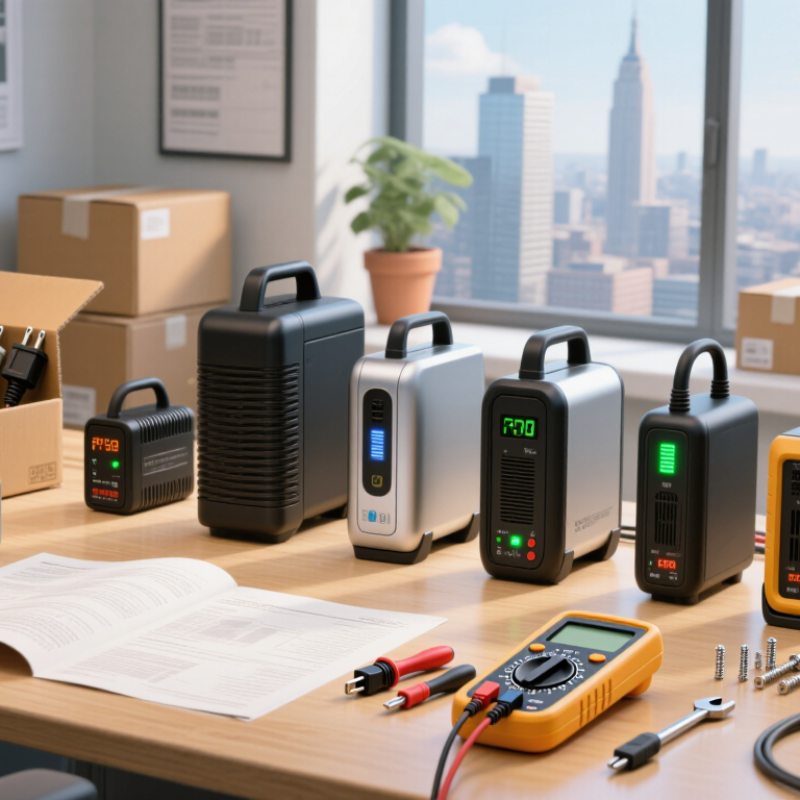
Top 10 Battery Charger Manufacturers for Global Buyers

What Defines a Leading Battery Charger Manufacturer?

What Defines a Leading Battery Charger Manufacturer?

A leading Battery Charger manufacturer proves performance beyond a product catalogue. The International Energy Agency reported that global public charging points exceeded four million in 2023, growing by almost 40% in one year. This expansion raises buyer expectations. Reliable manufacturers should publish efficiency curves, thermal limits, charging profiles, and test conditions. A charger that works in a laboratory may fail beside a dusty warehouse door.

Safety engineering matters just as much as charging speed. Manufacturers should demonstrate compliance with relevant IEC requirements, electrical protection testing, and documented quality controls. Strong suppliers also use traceable components, firmware change records, and repeatable end-of-line testing. Independent certification adds credibility, but certificates alone are not enough. Buyers should inspect warranty terms, failure-rate data, service response times, and replacement procedures.

Field experience often reveals the real difference. Good suppliers help configure voltage ranges, connectors, enclosure ratings, and communication protocols for specific equipment. They monitor overheating, noise, and cable wear after installation. Small details matter. Still, no manufacturer is perfect. Public data may omit early failures, and sustainability claims can be difficult to compare. The Global Battery Alliance has emphasized battery-passport data and supply-chain transparency, yet reporting quality remains uneven. A careful buyer should request sample test reports, audited production evidence, and references from comparable operating environments. That extra scrutiny may feel slow. It is usually cheaper than repeated downtime.

How Battery Charger Manufacturers Serve Global Markets

Battery charger manufacturers now serve buyers across different grids, climates, and transport systems. The International Energy Agency reported nearly 14 million electric cars sold worldwide in 2023. That growth increases demand for dependable charging equipment and replacement units. A Battery Charger must handle local voltage, plug standards, safety rules, and user habits.

Experienced manufacturers design regional versions instead of selling one universal model. They test thermal performance in hot warehouses and freezing delivery routes. They also provide multilingual manuals, traceable serial numbers, and remote diagnostic support. Compliance with IEC safety standards and regional certification requirements remains essential. Importers should verify test reports, warranty terms, spare-part access, and factory inspection records before ordering. A low purchase price can become expensive after customs delays or repeated returns.

The International Energy Agency’s Global EV Outlook 2024 noted that public charging points exceeded four million globally in 2023. This expanding network requires chargers with stable communication, overload protection, and flexible installation options. Manufacturers serving global markets increasingly offer modular designs, interchangeable cables, and software updates. However, compatibility claims deserve careful review. Some products perform well in laboratories but struggle with dust, unstable power, or crowded charging sites. That gap still needs honest attention. Supplier scorecards should measure field failures, response times, and documented corrective actions, not only production volume.

Top 10 Battery Charger Manufacturers and Their Core Strengths

Top battery charger manufacturers compete through distinct strengths, not product volume alone. The International Energy Agency reported over four million public electric-vehicle charging points worldwide in 2023, a year-on-year increase of about 40%. This growth raises expectations for safe, efficient, and serviceable charging equipment.

Leading manufacturers usually show strength in thermal control, power conversion, and certification management. Their engineering teams test chargers under heat, voltage fluctuation, and repeated load cycles. For an Aa Battery Charger, stable current output matters because household batteries often serve cameras, toys, and emergency devices. Small size helps, but poor heat dissipation can shorten battery life. Safety comes first.

Market research from Grand View Research indicates continued growth in the global battery charger market, supported by electric mobility, consumer electronics, and rechargeable energy storage. The strongest suppliers combine flexible customization with dependable production quality. They can adjust connectors, charging profiles, casing materials, and firmware for different markets. Clear manuals and responsive technical support also reveal practical experience. A polished factory audit is useful, yet it cannot replace long-term field data. No supplier is perfect. Buyers should question efficiency claims, inspect test records, and compare warranty handling before signing contracts.

How Charger Technologies Differ Across Product Categories

Top 10 Battery Charger Manufacturers for Global Buyers

How Charger Technologies Differ Across Product Categories

Battery chargers are not interchangeable, even when their plugs look similar. Phone chargers usually prioritize compact size, USB-C compatibility, and fast Power Delivery. Gallium nitride designs reduce heat and weight. Heat matters. Poor thermal control can shorten service life.

Laptop chargers require higher wattage and stable voltage regulation. A charger may power the computer but charge slowly under heavy workloads. That difference is easy to miss. For buyers, check sustained output, cable capacity, connector type, and protection against overvoltage. In my procurement experience, vague “fast charging” claims often deserve closer testing.

Vehicle and industrial chargers follow different rules. Electric vehicle equipment needs communication with the vehicle, weather resistance, and careful load management. Lead-acid, lithium-ion, and other battery chemistries also require different charging profiles. Using the wrong profile can reduce capacity or create a safety risk. Industrial systems may add temperature sensors, remote monitoring, and redundant protection. Portable power-station chargers sit between consumer and professional categories. They often balance solar input, wall charging, and battery management. A neat specification sheet can still mislead. Actual performance changes with cable length, ambient heat, and battery age. Global buyers should request test data, safety documentation, warranty terms, and regional compatibility before comparing the top ten manufacturers.

Which Standards and Certifications Global Buyers Should Check

For global battery-charger buyers, certification is a purchasing filter, not decoration. The International Energy Agency reported more than four million public electric-vehicle charging points worldwide at the end of 2023. That rapid expansion increases the need for consistent safety evidence. Check IEC 60335-2-29 for household and similar battery chargers. For electric-vehicle equipment, review IEC 61851 and IEC 62196 requirements. The exact edition matters.

Ask manufacturers for complete test reports, model numbers, input ranges, temperature limits, and factory locations. CE marking may support European market access, but it is not always an independent quality approval. Buyers should also verify EMC testing, electrical safety, RoHS material compliance, and local radio requirements for connected chargers. In North America, applicable national safety standards and certification marks should match the final product, plug, enclosure, and software version. The U.S. Department of Energy’s Alternative Fuels Data Center shows how quickly charging infrastructure is expanding, yet supplier documents often lag behind product revisions.

Tips: Request a certificate database link and compare every model number. Check whether the report covers the supplied adapter, cable, and battery interface. For lithium-battery applications, review IEC 62133-2 and UN 38.3 evidence where relevant. A transport test is not the same as charger certification. Do not rely on a PDF alone. In supplier audits, small details fail first: an outdated address, missing regional plug, or unexplained firmware change. I may sound cautious, but one overlooked revision can invalidate an otherwise convincing compliance file.

Top 10 Battery Charger Manufacturers for Global Buyers - Which Standards and Certifications Global Buyers Should Check

No. Buyer Verification Area Relevant Standard or Regulation Products or Markets Covered Documents to Request from a Manufacturer Priority
1 Household and Similar-Use Safety IEC 60335-2-29 Battery chargers intended for household and similar applications, including many consumer and light-commercial products. Test report, certificate if available, rated-input and output data, abnormal-operation and temperature-test results. High
2 ICT and Electronic Equipment Safety IEC 62368-1 External chargers and power supplies used with information, communication, audio or video equipment. CB test report, certificate of conformity, safety-critical component list and product construction files. High
3 North American Charger Safety UL 1310 and/or UL 1236 UL 1310 is commonly associated with Class 2 power units; UL 1236 covers battery chargers for North American applications. NRTL certification, certification number, product-listing record, label artwork and production-site information. High
4 Electromagnetic Compatibility IEC 61000-6-1 / IEC 61000-6-3; IEC 61000-6-2 / IEC 61000-6-4 Residential, commercial and light-industrial environments, with separate emission and immunity requirements. EMC test report covering conducted emissions, radiated emissions, electrostatic discharge, surge and fast transients. High
5 European Market Access CE marking; Low Voltage Directive 2014/35/EU; EMC Directive 2014/30/EU Electrical chargers placed on the European Union market within the applicable voltage range and product scope. EU Declaration of Conformity, technical file, applicable test reports and CE label photographs. High
6 United Kingdom Market Access UKCA; Electrical Equipment (Safety) Regulations 2016; EMC Regulations 2016 Chargers supplied to Great Britain where UK conformity-assessment and labeling requirements apply. UK Declaration of Conformity, technical documentation, applicable test reports and UKCA marking evidence. Medium
7 Radio-Frequency and Digital Interference FCC Part 15, especially unintentional-radiator requirements Digital or switching chargers marketed in the United States that can generate or use radio-frequency energy. FCC test report, Supplier’s Declaration of Conformity where applicable, identification of the responsible party and user manual statements. Medium
8 Hazardous-Substance Restrictions EU RoHS Directive 2011/65/EU and Delegated Directive (EU) 2015/863; REACH Regulation (EC) No. 1907/2006 Electrical and electronic chargers supplied into the EU and other markets adopting similar substance controls. RoHS declaration, material declaration, restricted-substance test report and REACH SVHC statement. High
9 Lithium Battery Compatibility IEC 62133-2 Portable sealed secondary lithium cells and batteries used with or charged by the equipment. This standard generally applies to the battery, not the charger alone. Battery certificate, cell data sheet, BMS specifications, charging profile and evidence that charger output matches battery limits. High
10 Transport and Export Documentation UN 38.3, where lithium batteries or battery packs are included or shipped with the product Air, sea, road and courier shipments involving lithium cells or batteries; standalone chargers normally do not require UN 38.3 testing. UN 38.3 test summary, battery classification, Safety Data Sheet where required, packaging instructions and transport declaration. Medium
Buyer note: The applicable standards depend on the charger design, battery chemistry, intended use, rated voltage, destination market and whether a battery is supplied with the charger. Certificates should be checked against the exact model number, revision, production site and rated output.

How to Compare Suppliers, Pricing, Quality, and Support

Choosing among the top battery charger manufacturers requires more than comparing catalog prices. Global buyers should examine factory experience, production controls, and documented testing. Ask whether an Rv Battery Charger supports the required battery chemistry, voltage range, charging stages, and ambient conditions. Request sample units before placing a large order. Photos are not proof.

Pricing should include tooling, packaging, shipping, duties, spare parts, and warranty handling. A low quotation may hide high minimum order quantities or costly replacements. Compare lead times using recent production records, not promises. Check output stability, connector quality, heat management, and protection against overcurrent or short circuits. Independent test reports add confidence, especially when they match the exact model.

Support matters. Measure response time before signing a contract. Can the supplier provide wiring diagrams, firmware guidance, troubleshooting videos, and replacement components? Clarify warranty exclusions and repair responsibilities in writing. One review mistake is treating certification documents as permanent evidence; standards and product designs can change. Recheck the current model, not only the company profile. I would also score communication quality, because unclear answers often become expensive delays. A supplier may offer excellent hardware but weak after-sales service. That gap deserves a lower ranking.

Top 10 Battery Charger Manufacturers for Global Buyers

How to Compare Suppliers, Pricing, Quality, and Support

How to use this scorecard: Quality and compliance should receive the highest weighting because battery chargers must meet electrical safety, efficiency, and electromagnetic compatibility requirements. Pricing is important, but buyers should also assess lead time, warranty coverage, customization capability, minimum order quantity, and after-sales support. Actual supplier scores and quotations vary by charger type, order volume, certification requirements, and destination market.

How Global Buyers Can Select the Right Manufacturer

Top 10 Battery Charger Manufacturers for Global Buyers

How Global Buyers Can Select the Right Manufacturer

Choosing among the top 10 battery charger manufacturers requires more than comparing unit prices. The IEA’s Global EV Outlook 2024 reported nearly 14 million electric car sales in 2023. This growth increases demand for chargers that remain stable across heat, voltage variation, and repeated use. Ask each manufacturer for recent test records, production capacity, and failure-rate data. Marketing claims are not enough.

Request three samples from separate production batches. Measure charging efficiency, thermal rise, ripple, and standby consumption. A thermal camera can reveal hot spots near the transformer or Battery Charger Ic during a 48-hour load test. Confirm compliance with relevant IEC, UL, CE, or regional requirements for your target markets. Also inspect the factory’s quality system, component traceability, calibration records, and corrective-action process. ISO 9001 certification helps, but it does not replace an on-site audit.

Look closely at after-sales support. The U.S. Department of Energy has reported that charging reliability strongly affects electric-vehicle usability, especially in public networks. Ask how quickly the supplier handles field failures and whether firmware or component changes are documented. Check warranty terms, spare-part availability, packaging strength, and shipping conditions. A low quotation may hide expensive retesting. I have seen supplier scorecards overvalue price and ignore thermal performance. That mistake is easy to repeat. Select a manufacturer that can explain one failed sample clearly, not one that promises zero failures.

FAQS

Why do global buyers need region-specific battery chargers?

Electrical grids, plug designs, and safety rules vary by region. A charger must match local voltage and frequency. One universal model may perform poorly.

What should manufacturers test before selling chargers internationally?

They should test heat, freezing temperatures, dust, unstable power, and transport conditions. A warehouse roof can become extremely hot. Cold delivery routes also matter.

Which documents should importers request?

Request safety certificates, test reports, warranty terms, serial-number records, and factory inspection documents. Also confirm spare-part access. Missing paperwork creates delays.

Are battery chargers interchangeable across devices?

No. Phone, laptop, vehicle, and industrial chargers use different power levels and charging controls. Similar plugs can hide major technical differences.

What should buyers check when choosing a phone or laptop charger?

Check sustained output, connector type, cable capacity, and voltage regulation. Fast charging claims need testing. A laptop may charge slowly during heavy use.

Why do vehicle and industrial chargers require extra protection?

Vehicle chargers communicate with the vehicle and manage electrical loads. Industrial systems may use temperature sensors and backup protection. These safeguards reduce avoidable failures.

How do battery chemistries affect charger selection?

Lead-acid and lithium-ion batteries need different charging profiles. The wrong profile can reduce capacity or create a safety risk. Chemistry must be confirmed.

Can modular chargers improve global purchasing?

Modular designs may support interchangeable cables, flexible installation, and software updates. They can simplify regional adaptation. Compatibility still requires field testing.

How should buyers compare charger manufacturers?

Compare field failure rates, response times, corrective actions, warranty support, and total costs. A low purchase price may lead to returns and customs delays. Production volume alone is not enough.

Do laboratory results guarantee real-world performance?

No. Dust, cable length, heat, crowded charging sites, and battery age can change results. A neat specification sheet can still mislead. More honest testing is needed.

Conclusion

This article explains what distinguishes a leading Battery Charger manufacturer in the global market, including engineering capability, production consistency, product safety, customization, and dependable customer support. It explores how manufacturers serve international buyers through flexible supply chains, regional compliance, technical documentation, and after-sales service. The overview also compares major supplier types and their core strengths, from compact consumer chargers and industrial systems to automotive, renewable-energy, and specialized charging solutions.

Global buyers will learn how charger technologies differ by application, battery chemistry, power requirements, charging speed, efficiency, and smart-control features. The article also highlights important standards and certifications to verify, along with practical methods for comparing suppliers, pricing, quality control, delivery reliability, warranty terms, and technical assistance. By evaluating product performance, compliance, manufacturing capacity, communication, and long-term support, buyers can select a suitable manufacturer that matches their application, market requirements, budget, and growth plans.
Charlotte

Charlotte

Charlotte is a dedicated marketing professional at ELITE POWER, a pioneering enterprise in the new energy production sector. With a strong focus on intelligent green energy storage solutions, she possesses an exceptional understanding of the company's diverse product offerings, which include......
Previous China Top Female Adapter Manufacturers for Global Buyers